Sarfaraz Ahmed Rehman's Story
Story by Sarfaraz Ahmed Rehman on CaySpace (Sarfaraz Ahmed Rehman)
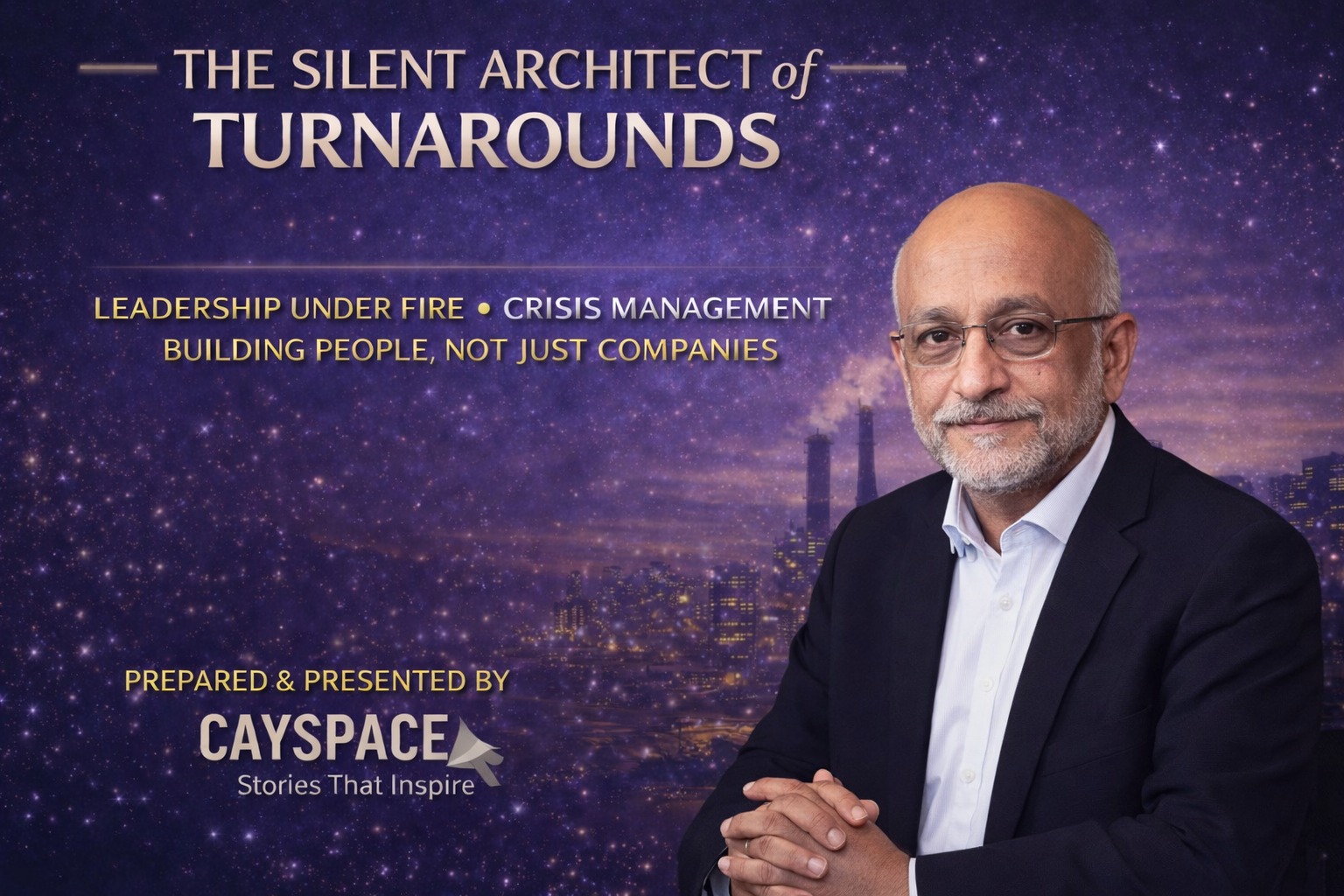
The Silent Architect of Turnarounds: My Journey from the Boardroom to the Soul
The phone on my nightstand didn't just ring; it screamed. It was 4:00 AM. In the fertilizer industry, a call at that hour usually means one thing: catastrophe. "Sir, the plant has destabilized. Ammonia levels are fluctuating. We’ve been fighting it for an hour." In those seconds, the "work-life balance" posters you see in HR offices vanish. You realize that the lives of 100,000 people living in the colony around that plant are tethered to your next decision. If I panicked, the team panicked. If they panicked, people died. I sat up, forced my heart rate down, and realized: Leadership isn't a throne; it’s a cross you carry when everyone else wants to run.
Early Life & The Power of Silence
I am a product of old Karachi, a "baby boomer" born into a world where your word was your currency. I studied at Karachi Grammar School, but my real education happened at home. My parents drilled a singular philosophy into me: "If you talk about yourself too much, you’ve already started falling behind."
I grew up as an observer. While others were busy projecting an image, I was busy deconstructing how things worked. This lack of "ego-noise" became my greatest weapon. I didn't want to be "The Boss"; I wanted to be the person who knew exactly which bolt was loose when the machine started rattling.
Education & The Accidental Acceleration
I qualified as a Chartered Accountant in England, which gave me the "logic of numbers." In 1983, I joined Unilever as a management trainee. I expected a long, slow climb.
Then, the Afghan crisis hit. USAID began poaching senior talent, creating a vacuum. My 11-month training was slashed to seven. My bosses vanished into higher-paying NGO roles, and suddenly, I was shoved into a manager’s seat. I didn't have the experience, but I had the responsibility. I learned that when the door of opportunity opens, it doesn't ask if you’re ready, it only asks if you’re willing to own the outcome.
The "Blood on the Ground" Years
The most brutal chapter of my life was the SmithKline (GSK) merger. I was 30, tasked as a merger controller. Imagine two tribes who hate each other being told they are now one family. There was "blood on the ground", metaphorically and emotionally.
People were sabotaging processes, guarding information like gold, and waiting for me to fail. I felt isolated and ill-equipped. But it was here I learned the "Internal Pivot": You cannot manage a company until you can manage the friction between human egos. Technical skills got me the job; emotional endurance kept me in it.
Struggles, Failures, and the Heart’s Toll
I have led six corporate turnarounds. A "turnaround" is just a polite word for "fixing someone else’s disaster." At Engro Foods and Fauji Bin Qasim, I walked into rooms filled with defeated people and bleeding balance sheets.
The toll was physical. Years of high-stress environments eventually led me to a heart operation. I had to face my own mortality while managing the survival of multi-billion rupee entities. I realized that anxiety is a choice we make when we stop trusting the Process (and the Creator). I overcame the darkness not by working harder, but by becoming calmer. If the CEO is breathless, the company suffocates.
Professional Journey: The Sting in the Tail
My career moved from the high-velocity world of FMCG (PepsiCo, Engro) to the high-stakes world of Fertilizer (FFC).
· FMCG is a 9/10 difficulty: It’s a street fight every day for shelf space and consumer attention.
· Heavy Industry is a 4/10 daily, but 100/10 in risk: It is systemized, but if that "Black Swan" event, an ammonia leak, occurs, it’s a national tragedy.
You have to be a "Father Figure." You aren't just managing "Human Resources"; you are responsible for the guy in the boiler room and the child drinking the milk your company processed.
Practical Advice for the Next Generation
Don't aim for "CEO." Aim for Competence.
1. Take the Position: Don't sit on the fence. If a decision needs to be made, make it and own the failure if it goes wrong.
2. Master the "Un-fun": Everyone wants the gala dinners. No one wants to audit the safety valves. The person who understands the valves eventually runs the company.
3. Optimism is a Strategy: The world is becoming more difficult, but "Rizq" and "Izzat" (Respect) are in Allah’s hands. If you believe this, you become unshakeable.
4. The "Lord of the Rings" Rule: You might feel like a "small, battered Hobbit" in a world of giants. But it is the small person’s persistence that saves the world.
1. Legacy: More Than a Million Dollars
People talk about the "Million Dollar Sale" of Engro Foods. I don't care about that. What I count as success are the 32 people who started under me and are now C-suite executives and CEOs.
My vision was never to build companies; it was to build the people who build companies. When I am gone, I don't want a statue. I just want two or three generations to say: "He was a good man who took responsibility."
"Legacy isn't about being rich. Of the 147 people remembered 1,500 years after their death, not a single one was there just for their wealth. They were there for their impact, their philosophy, and their sacrifice."